
-
Table of Contents
The aerospace industry is experiencing a significant transformation driven by the increasing demand for advanced composites. These lightweight, high-strength materials are essential for enhancing fuel efficiency, reducing emissions, and improving overall aircraft performance. As manufacturers seek to meet stringent regulatory requirements and consumer expectations for sustainability, the integration of advanced composites into aircraft design and production has become a critical focus. This shift not only supports the development of next-generation aircraft but also fosters innovation in manufacturing processes, ultimately reshaping the future of aviation.
Innovations in Composite Materials for Aerospace Applications
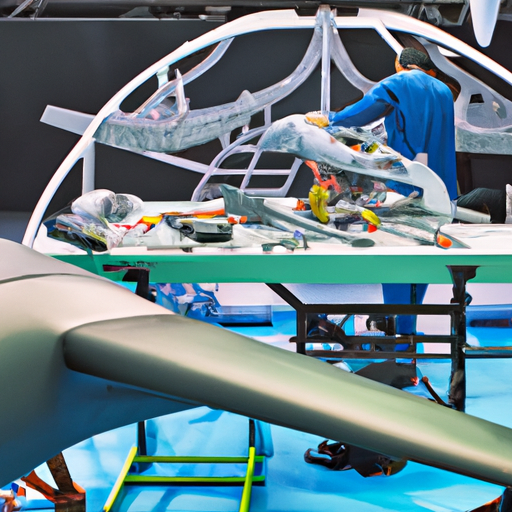
The aerospace industry is undergoing a transformative phase, driven by the relentless pursuit of efficiency, performance, and sustainability. At the heart of this evolution lies the increasing demand for advanced composite materials, which are revolutionizing aircraft design and manufacturing. Innovations in composite materials are not merely enhancing existing technologies; they are redefining the very parameters of what is possible in aerospace applications.
One of the most significant advancements in composite materials is the development of carbon fiber reinforced polymers (CFRPs). These materials are lauded for their exceptional strength-to-weight ratio, which allows for lighter aircraft structures without compromising safety or performance. As airlines and manufacturers strive to reduce fuel consumption and emissions, the integration of CFRPs into airframes and components has become a strategic imperative. For instance, the Boeing 787 Dreamliner and the Airbus A350 are prime examples of how these materials can be utilized to achieve significant weight savings, leading to lower operational costs and enhanced fuel efficiency.
Moreover, the aerospace sector is witnessing innovations in thermoplastic composites, which offer distinct advantages over traditional thermoset materials. Thermoplastic composites can be processed at lower temperatures and are more amenable to recycling, aligning with the industry’s growing emphasis on sustainability. This shift not only addresses environmental concerns but also opens new avenues for manufacturing techniques, such as automated fiber placement and 3D printing. These methods enable faster production cycles and greater design flexibility, allowing engineers to create complex geometries that were previously unattainable.
In addition to weight reduction and sustainability, the aerospace industry is also focused on improving the durability and performance of composite materials. Recent advancements in nanotechnology have led to the incorporation of nanoparticles into composite matrices, enhancing their mechanical properties and resistance to environmental degradation. This innovation is particularly crucial for aerospace applications, where materials must withstand extreme conditions, including temperature fluctuations, moisture, and UV exposure. By improving the longevity and reliability of composite components, manufacturers can reduce maintenance costs and increase the overall lifespan of aircraft.
Furthermore, the integration of smart materials into aerospace composites is paving the way for the next generation of aircraft. These materials can respond to environmental stimuli, such as changes in temperature or pressure, allowing for real-time monitoring and adaptive performance. For example, researchers are exploring the use of piezoelectric materials that can generate electrical energy from mechanical stress, potentially powering onboard systems and reducing reliance on traditional power sources. This innovation not only enhances the functionality of aircraft but also contributes to the broader goal of energy efficiency.
As the aerospace industry continues to embrace these innovations, collaboration between manufacturers, research institutions, and regulatory bodies becomes increasingly vital. The development of advanced composite materials requires a multidisciplinary approach, combining expertise in materials science, engineering, and manufacturing processes. By fostering partnerships and sharing knowledge, stakeholders can accelerate the adoption of these technologies and ensure that they meet the stringent safety and performance standards required in aviation.
In conclusion, the aerospace industry’s drive for advanced composite materials is reshaping the landscape of aircraft design and manufacturing. With innovations in carbon fiber composites, thermoplastics, nanotechnology, and smart materials, the sector is poised to achieve unprecedented levels of efficiency, sustainability, and performance. As these advancements continue to unfold, they will not only enhance the capabilities of modern aircraft but also contribute to a more sustainable future for aviation. The journey toward this future is marked by collaboration, creativity, and a commitment to pushing the boundaries of what is possible in aerospace technology.
The Role of Advanced Composites in Reducing Aircraft Weight
The aerospace industry is undergoing a transformative shift, with advanced composites playing a pivotal role in enhancing aircraft performance and efficiency. As airlines and manufacturers strive to meet stringent environmental regulations and consumer demands for fuel efficiency, the focus has increasingly turned to materials that can significantly reduce aircraft weight. Advanced composites, which typically consist of a matrix material reinforced with fibers, have emerged as a game-changer in this regard, offering a unique combination of strength, durability, and lightweight properties.
One of the primary advantages of advanced composites is their ability to replace traditional materials such as aluminum and steel, which have long been the backbone of aircraft construction. By utilizing composites, manufacturers can achieve substantial weight reductions without compromising structural integrity. For instance, carbon fiber reinforced polymers (CFRPs) are now widely used in various aircraft components, including wings, fuselage sections, and tail structures. These materials not only contribute to a lighter overall aircraft but also enhance fuel efficiency, which is a critical factor in an industry where fuel costs represent a significant portion of operational expenses.
Moreover, the reduction in weight achieved through the use of advanced composites translates directly into improved performance metrics. Lighter aircraft require less thrust to achieve flight, which in turn leads to lower fuel consumption and reduced greenhouse gas emissions. This is particularly important as the aerospace sector faces increasing pressure to adopt more sustainable practices. The International Air Transport Association (IATA) has set ambitious targets for reducing carbon emissions, and advanced composites are integral to meeting these goals. By enabling the design of more efficient aircraft, these materials help airlines not only comply with regulations but also appeal to environmentally conscious consumers.
In addition to their weight-saving benefits, advanced composites offer superior resistance to corrosion and fatigue compared to traditional materials. This durability translates into lower maintenance costs and longer service life for aircraft, further enhancing their economic viability. As airlines seek to maximize their return on investment, the longevity and reliability of aircraft become paramount. The use of advanced composites thus not only supports immediate operational efficiencies but also contributes to the long-term sustainability of fleet management.
Transitioning to advanced composites, however, is not without its challenges. The manufacturing processes for these materials can be complex and require specialized knowledge and equipment. As a result, the aerospace industry has seen a surge in investment in research and development to streamline production techniques and reduce costs. Innovations such as automated fiber placement and 3D printing are being explored to enhance the scalability of composite manufacturing, making it more accessible for a wider range of applications.
Furthermore, as the demand for advanced composites continues to grow, the supply chain must adapt to meet the needs of the aerospace sector. This includes not only sourcing raw materials but also ensuring that the necessary infrastructure is in place to support large-scale production. Collaboration between manufacturers, suppliers, and research institutions is essential to foster innovation and drive the development of new composite materials that can further enhance aircraft performance.
In conclusion, the role of advanced composites in reducing aircraft weight is a critical factor in the ongoing evolution of the aerospace industry. By enabling lighter, more fuel-efficient aircraft, these materials are not only helping airlines meet regulatory demands but also paving the way for a more sustainable future in aviation. As the industry continues to embrace these innovations, the potential for advanced composites to reshape the landscape of aerospace manufacturing remains significant, promising a new era of efficiency and performance.
Sustainability Trends in Aerospace Composites Manufacturing
The aerospace industry is undergoing a significant transformation, driven by the urgent need for sustainability and environmental responsibility. As manufacturers strive to reduce their carbon footprints and enhance fuel efficiency, advanced composites have emerged as a pivotal solution. These materials, which combine lightweight properties with exceptional strength, are increasingly being adopted in aircraft design and production, reflecting a broader trend towards sustainable practices in aerospace composites manufacturing.
One of the primary motivations behind this shift is the aerospace sector’s commitment to reducing greenhouse gas emissions. Traditional materials, such as aluminum and steel, while robust, contribute to heavier aircraft that consume more fuel. In contrast, advanced composites, including carbon fiber reinforced polymers and glass fiber composites, offer a lighter alternative that can significantly enhance fuel efficiency. By reducing the weight of aircraft, manufacturers can achieve lower fuel consumption, which not only translates to cost savings but also aligns with global efforts to combat climate change.
Moreover, the production processes for advanced composites are evolving to become more sustainable. Manufacturers are increasingly adopting closed-loop systems that minimize waste and energy consumption. For instance, the recycling of composite materials is gaining traction, allowing manufacturers to reclaim valuable resources and reduce the environmental impact associated with raw material extraction. This shift towards circular economy principles is not only beneficial for the environment but also enhances the economic viability of composite materials in the long term.
In addition to recycling, the aerospace industry is exploring bio-based composites as an alternative to traditional petroleum-based materials. These bio-composites, derived from renewable resources, offer a promising avenue for reducing reliance on fossil fuels. As research and development in this area continue to advance, the potential for integrating bio-based materials into aerospace applications is becoming increasingly feasible. This innovation not only supports sustainability goals but also positions manufacturers at the forefront of a rapidly evolving market.
Furthermore, regulatory pressures are driving the aerospace industry towards more sustainable practices. Governments and international organizations are implementing stricter emissions standards and sustainability guidelines, compelling manufacturers to adapt their processes and materials accordingly. As a result, companies that prioritize sustainability in their composites manufacturing are likely to gain a competitive edge in the marketplace. This trend is evident in the growing number of partnerships between aerospace manufacturers and material suppliers focused on developing eco-friendly solutions.
The emphasis on sustainability is also influencing the supply chain dynamics within the aerospace industry. Manufacturers are increasingly seeking suppliers who share their commitment to environmental responsibility. This shift is fostering collaboration across the supply chain, as companies work together to develop innovative materials and processes that align with sustainability goals. Such partnerships not only enhance the overall efficiency of production but also contribute to a more resilient and responsible aerospace ecosystem.
In conclusion, the aerospace industry’s drive for sustainability is reshaping the landscape of composites manufacturing. As advanced composites become integral to aircraft design, their lightweight properties and potential for recycling and bio-based alternatives are paving the way for a more sustainable future. With regulatory pressures and market demands pushing for greener solutions, the aerospace sector is poised to lead the charge in adopting innovative practices that prioritize environmental stewardship. This evolution not only benefits the industry but also contributes to a broader commitment to sustainability, ensuring that the skies remain clear for generations to come.The aerospace industry’s increasing focus on fuel efficiency, performance, and sustainability is driving a significant demand for advanced composites. These materials offer superior strength-to-weight ratios, corrosion resistance, and design flexibility, making them ideal for modern aircraft and spacecraft. As manufacturers seek to reduce weight and improve fuel economy, the integration of advanced composites into airframe structures, components, and interiors is becoming essential. Consequently, the aerospace sector is poised to continue its reliance on advanced composites, fostering innovation and growth within the materials industry.







Add comment